The Rabbits Won. Here's Why.
Flower Mound didn't get overrun by eastern cottontails by accident. It built them the perfect city — and now they're eating your salvia.
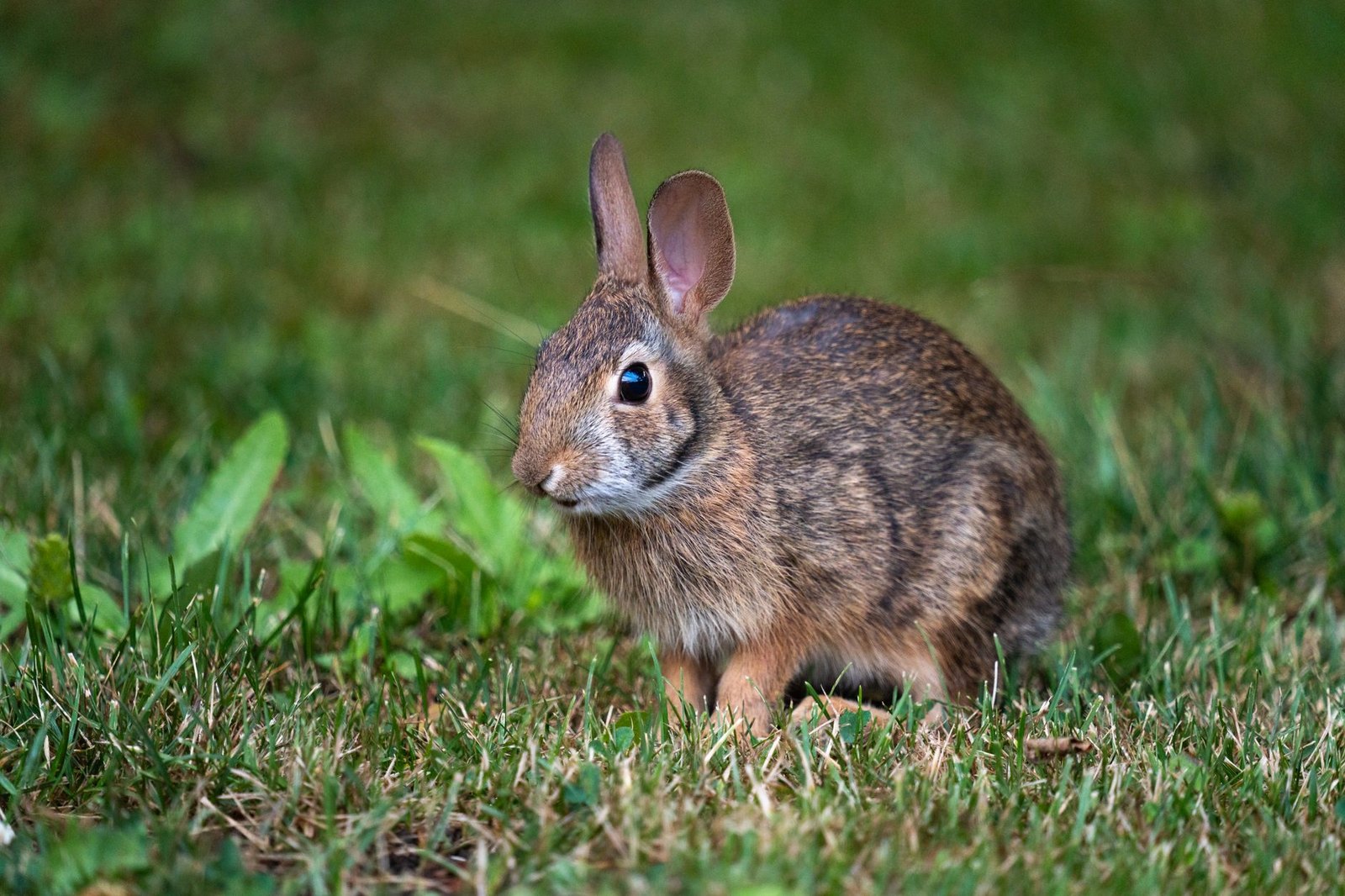
You step outside at dusk to check on your flower beds and there it is again: a fat little cottontail, sitting in what used to be your salvia, looking at you like you're the one who showed up uninvited. Your neighbor has three of them under her crepe myrtle. The Nextdoor app has become a daily rabbit grievance forum. The question everyone's asking is some version of: where did they all come from?
Short answer: they were always here. We just built them a better neighborhood than the one they had.
This Is Textbook Cottontail Behavior
The animal wrecking your flower beds is the eastern cottontail (Sylvilagus floridanus), the most widespread and abundant rabbit species in North America, and it has been a Denton County resident far longer than any of us. It occurs throughout the state of Texas. Texas Tech's Mammals of Texas puts it plainly: these cottontails are active largely in the twilight hours and at night, when they venture into open pastures, meadows, or lawns to forage — and they frequently live on the edges of towns and feed in gardens and flowerbeds.
This isn't a new invasion. It's a species doing exactly what it evolved to do. The eastern cottontail is ubiquitous, adjusting to North Texas' changing landscape and creating habitat for itself among suburban subdivisions. The surprise isn't that they're here. The surprise is how well we've set them up.
Flower Mound Built Them a Paradise
Cottontails have a very specific housing requirement. Optimal habitat includes open grassy areas, clearings, and old fields that support abundant green vegetation, with shrubs or hedgerows providing cover — and critical habitat components include dense, well-distributed escape cover interspersed with open foraging areas.
Read that again and picture your subdivision. Open lawn out front, privacy hedge along the fence, greenbelt corridor behind the house. That's not incidental overlap. That is a cottontail habitat description.
Flower Mound's rapid growth from the 1980s through the 2000s converted open rangeland into exactly this pattern: irrigated lawns ringed by ornamental shrubs, threaded through with greenbelt corridors and creek drainages that provide the brushy escape cover rabbits need to feel safe while foraging ten feet into your flower bed. Landscaped yards provide excellent rabbit habitat, which accounts for how common cottontails are in suburban and urban areas. The town's SMARTGrowth open space preservation, a genuinely good land-use policy, cements this dynamic by maintaining undeveloped corridors right alongside residential gardens. The rabbits commute between the two without effort.
Suburban irrigation adds a layer that open rangeland never offered. Green vegetation stays green through a Texas summer, removing one of the natural brakes on rabbit numbers. Drought used to thin the herd. Your sprinkler system doesn't let that happen anymore.
The Math Is Not in Your Garden's Favor
An 85-percent mortality rate is what normally offsets the cottontail's reproduction potential. But cottontails may have four to five litters each year with as many as eight young per litter. When that mortality rate drops — fewer predators, more food, milder conditions — the population finds a higher floor. The gestation period is just 28–29 days. The young are blind and helpless at birth but grow rapidly. Young females born early in the year may mature sexually and produce young in their first summer.
The eastern cottontail is the most prolific rabbit in Texas and the most common rabbit species in North America. They can begin reproducing as early as two months old and generally have three to four litters a year — although they have the capacity to have up to six or seven.
That's a machine built for filling available habitat. We handed it a city full of available habitat.
So Where Are the Coyotes?
Around, but stretched thin. Coyotes and bobcats are the main controllers of rabbit populations in North Texas suburban ecosystems, but development is pushing these predators into shrinking green space corridors. Traffic, domestic dogs, and general urban noise reduce their effectiveness as a population check. The rabbits foraging in your front yard are operating in a largely predator-reduced zone. Hawks and owls exist out there, but not at the density you'd find in open rangeland.
The eastern cottontail appears to be increasing its distribution throughout the United States. One fair caveat: some wildlife ecologists argue that suburban rabbit "explosions" are partly a perception problem — you notice them more when you have a garden to protect. Texas Parks and Wildlife doesn't formally monitor cottontail populations, so there's no official baseline to compare against. What feels like a surge might partly be redistribution into exactly the kind of neighborhoods we've built. Either way, they're in your beds.
How to Actually Slow Them Down
There's no magic spray that makes them leave. A few things actually work.
Fencing is the only reliable fix for beds you care about. A fence of 2-foot chicken wire with the bottom tight to the ground or buried a few inches is sufficient — and be sure the mesh is 1 inch or smaller so that young rabbits can't go through it. Not glamorous. Works.
For trees and woody shrubs, wrap the trunk. Cylinders of 1/4-inch wire hardware cloth will protect valuable young orchard trees or landscape plants. Rabbits can completely girdle a young trunk, cutting off water and nutrients — everything above the damage eventually dies. A cheap wire cylinder prevents that entirely.
Repellents buy time, not victory. Taste repellents are usually more effective than odor repellents — but the degree of efficacy is highly variable, depending on the behavior and number of rabbits and alternative foods available. Anything you spray needs reapplication after rain. In North Texas, that means keeping a regular schedule.
Motion-activated sprinklers work, and have the added benefit of being funny at 2 a.m.
Habitat modification is the most effective long-term tool — removing brush piles, dense low shrubs against fences, and weedy patches that give rabbits daytime cover. Cottontails will not survive long without access to quality habitat that provides thick protective cover and ample food. The problem is that HOA landscaping requirements and privacy hedges make this largely impractical for most Flower Mound yards. We built the cover in. Asking homeowners to rip it out isn't realistic.
One Thing Worth Knowing
Rabbits are voracious eaters and leave clean-cut damage — check the leaves and stems of your plants for cleanly cut damage, because insects and other pests usually leave jagged edges. If your plants look like someone took scissors to them at ground level, that's your cottontail. Deer damage looks torn and ragged. Knowing the difference saves you from blaming the wrong animal and spending money on the wrong solution.
The eastern cottontail isn't going anywhere. We built it a city, and it moved in. The least we can do is fence the flower beds.
- Eastern Cottontail — Wikipedia
- Eastern Cottontail Species Account — Texas Tech Mammals of Texas
- Rabbits and Hares — Texas Parks and Wildlife Department
- Rabbits in Texas — Wildlife Informer
- Eastern Cottontail — North Texas Ramblings
- Eastern Cottontail — DFW Urban Wildlife
- Cottontail Rabbit Damage Management — eXtension
- Preventing and Controlling Damage Caused by Cottontail Rabbits — University of Missouri Extension
- Rabbits: How to Get Rid of Rabbits in the Garden — Old Farmer's Almanac
- Wild Thing: Eastern Cottontails — Texas Parks & Wildlife Magazine
- Wild Rabbits in Texas: Types and Where You're Likely to Find Them - A-Z Animals
- Wild Rabbits and Hares in Texas - Texas Wildlife Exemptions, Plans and Consulting | Landmark Wildlife Management LLC
- Types of Wild Rabbits in Texas | Pets on Mom.com
- Rabbits: Damage Management | Natural Resources
- Cottontail Rabbit Damage Management – Grapes
- Controlling Cottontail and Jackrabbit Damage - Texas A&M AgriLife Extension Service
- Rabbits: 6 Effective Methods to Keep Rabbits out of Your Garden
- Rabbit Ecology and Damage Management – Wisconsin Horticulture